Sulfur Caves in Minecraft 26.2: Complete Guide
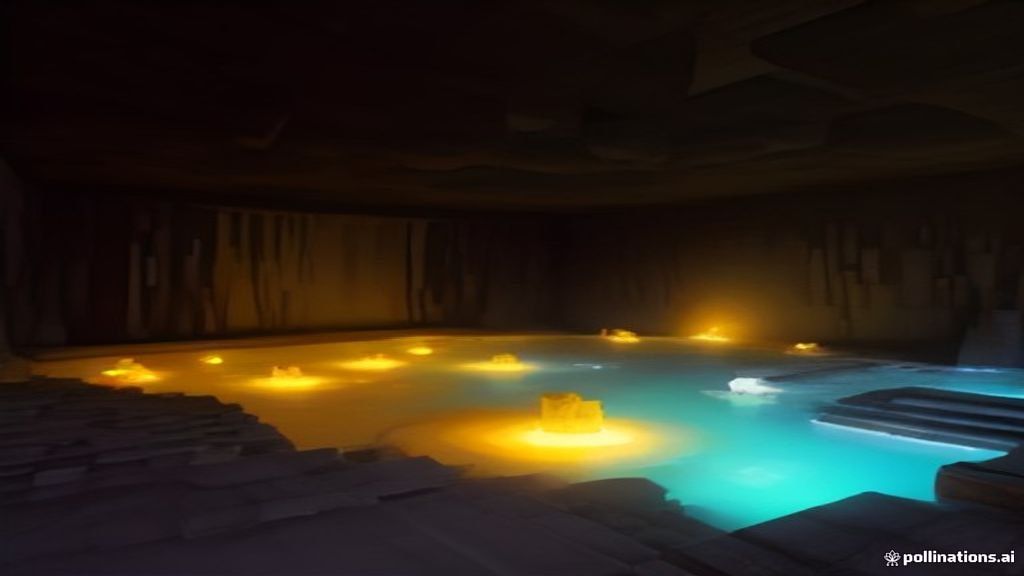
Sulfur Caves are the headline underground biome from Minecraft 26.2 "Chaos Cubed," released June 16, 2026. They generate beneath hills and mountains, filled with banded layers of yellow sulfur and orange cinnabar, bubbling pools of potent sulfur, and a peculiar mob called the Sulfur Cube that absorbs blocks and changes its physics. Two complete building block sets, functional geysers, and sulfur spikes round out the update. Here's how to find them, what to do inside, and why the Sulfur Cube is the most mechanically unusual mob Mojang has added in years.
1. How to Find Sulfur Caves
The smartest way to locate a Sulfur Cave is from the surface. Mojang added Sulfur Springs as visible markers that generate above ground wherever Sulfur Caves sit below. They're built from sulfur, potent sulfur, and magma blocks, and come in four size variants: small, medium, large, and extra large. The size of the spring hints at the scale of the cave underneath.
This is a real improvement to underground exploration. Historically, caving in Minecraft meant digging and hoping. A visible surface signpost for a specific biome means you can plan your descent rather than stumble around. Spot a Sulfur Spring on a hillside, dig straight down, and you'll hit the biome.
If you have cheats enabled, try:
/locate biome minecraft:sulfur_caves
2. The Sulfur Cube: A Mob You Configure
The Sulfur Cube is the star of Chaos Cubed. It's a passive mob that spawns inside Sulfur Caves, and it does something no other Minecraft mob does: it absorbs blocks and adopts their physical properties.
When you interact with a Sulfur Cube while holding a block, it absorbs that block and becomes a physical object you can push. Its speed, bounciness, friction, and buoyancy all change to match the block's material category:
| Block absorbed | Archetype | Behavior |
|---|---|---|
| Wood | Bouncy | Fast, high bounce, buoyant |
| Ice | Fast Sliding | Fast, no bounce, low friction |
| Wool | Light | Slow, high bounce, floats in water |
| Stone | Slow Bouncy | Slow, high bounce |
| TNT | Explosive | Can be primed by redstone or fire |
| Magma Block | Hot | Damages entities on contact |
| Soul Sand | High Resistance | Very slow, high friction |
| Honeycomb Block | Sticky | Sticks with extreme ground friction |
Use shears on the cube to remove the absorbed block and re-enable its AI. When killed, a large cube splits into two smaller ones, and small cubes can be fed slime balls to grow back. You can even pick up a large Sulfur Cube with an empty bucket and place it elsewhere. Dispensers can insert blocks, use shears, and spawn cubes from buckets, making them automation-friendly.
3. Building with Sulfur and Cinnabar
Chaos Cubed adds two complete block sets, and for builders that's the real prize. Both sulfur and cinnabar come with polished and brick variants, each with slabs, stairs, and walls. There are also chiseled sulfur and chiseled cinnabar blocks for decorative detailing.
The sulfur palette is a warm yellow, while cinnabar leans orange-red. Together they create a striking volcanic or industrial aesthetic that no previous Minecraft block set offered. Two full block families with all variant types is not a small addition, and the building community has already started putting them to work in bases, statues, and pathway designs.
4. Potent Sulfur and Geysers
Potent Sulfur is a hazard block that generates in water pools inside Sulfur Caves. It emits bubbles that rise through up to four water source blocks and create a cloud of nausea-inducing gas on the surface, spreading up to three blocks. The effect is disorienting rather than lethal, which makes navigating these caves genuinely tense.
You can craft Potent Sulfur from nine sulfur blocks. Place it above a magma block under one to four water source blocks and you've built a geyser. With magma underneath, the geyser erupts at random intervals, shooting a plume of water particles upward and applying an upward impulse to any entity above it. With lava underneath, the eruption is continuous but slightly muted. Geyser eruptions emit game events that sculk sensors can detect, opening up redstone possibilities.
5. Sulfur Spikes
Sulfur Spikes are the stalactite and stalagmite blocks of the sulfur set. They generate naturally on sulfur blocks inside the caves and behave like pointed dripstone: place them on the ceiling for stalactites or the floor for stalagmites. They merge when tips are adjacent (sneak while placing to prevent merging), stalactites can grow when placed under sulfur blocks, and falling stalactites deal damage. Four sulfur spikes can be crafted into one sulfur block.
⛏ Mine faster in sulfur caves: Vein Miner datapack — sneak-mine an ore and the whole vein drops in one break. Vanilla 1.21+, works on servers and Realms.
6. Extra Features: Music, Cave Spiders, and More
- New music disc "Bounce" by fingerspit, found in mineshaft chest minecarts inside Sulfur Caves. It has a comparator output of 8 in a jukebox.
- Five new background tracks by fingerspit: Shores, Memories, Nightly, Home, and Ebb.
- Cave spiders now spawn naturally in Sulfur Caves, not just in abandoned mineshafts. This makes them a relevant overworld threat again.
- "Uh Oh" advancement — awarded when a Sulfur Cube absorbs a TNT block.
- Friends List added to the title screen and pause menu, with presence indicators and toast notifications.
Sulfur Caves may not have a boss or a dimension, but they deliver something Minecraft has never had before: a mob whose physical properties you configure, two complete building palettes, a surface-to-underground wayfinding system, and functional geysers for redstone contraptions. It's a toolkit update, and toolkits get used for years. Find a Sulfur Spring, dig down, and start experimenting.